1. Introduction — The New Age of AI-Driven Branding
For years, small and medium-sized businesses (SMBs) have faced the same challenge: how to produce consistent, on-brand marketing content without breaking their budgets. The rise of AI design tools promised to help, yet many solutions still rely heavily on templates that often fail to capture a company’s unique tone and identity.
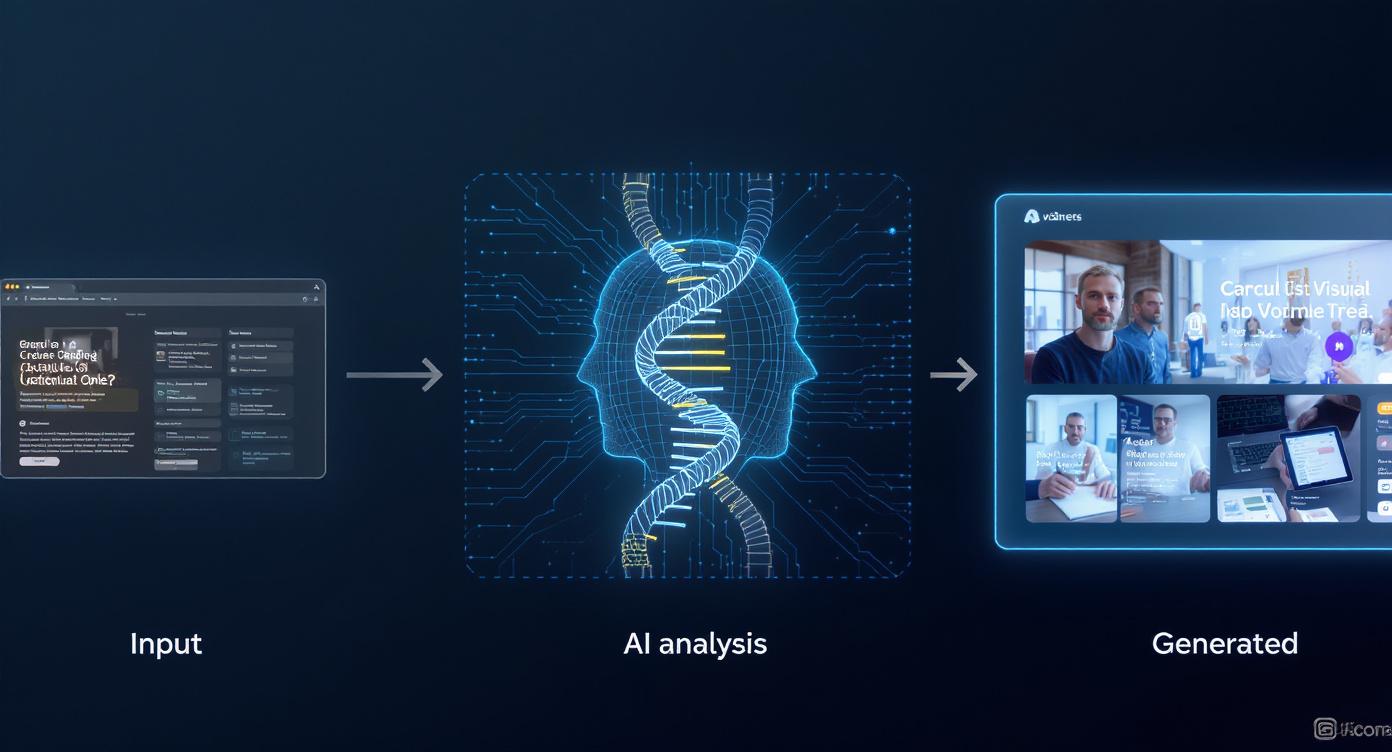
Enter Pomelli, a new experiment from Google Labs, built in collaboration with Google DeepMind. This AI-powered content generation tool analyzes your website to extract your brand’s DNA — including tone, colors, fonts, and imagery — and uses it to create social posts, banners, and campaign ideas that feel unmistakably yours. For SMBs, it could mark the beginning of a new era of accessible, professional branding.
This article explores what Pomelli is, how it works, why it matters for small businesses, and what its arrival signals for the future of AI-driven marketing.

2. Why SMBs Struggle with Brand Consistency
Marketing has always been a resource-intensive endeavor. Small business owners wear multiple hats — manager, accountant, marketer, designer — and brand storytelling often gets left behind.
While tools like Canva, Adobe Express, or Microsoft Designer have simplified the creative process, they still rely on pre-set templates. Without an understanding of a brand’s unique identity, such assets can feel generic or disconnected.
Brand consistency is critical in today’s digital landscape. Every social post, banner, or email needs to reflect the same voice and aesthetic. But for SMBs without a dedicated marketing team, keeping up with this demand is nearly impossible. Google’s Pomelli aims to solve that problem by automating the creative process while maintaining brand integrity — making high-quality branding attainable for everyone.

3. What Is Pomelli? — Google’s AI Marketing Experiment
Pomelli is an AI-driven marketing assistant from Google Labs designed to help businesses create cohesive, on-brand content with minimal effort. Rather than acting as a simple template engine, it interprets the essence of your brand through data extracted directly from your website.
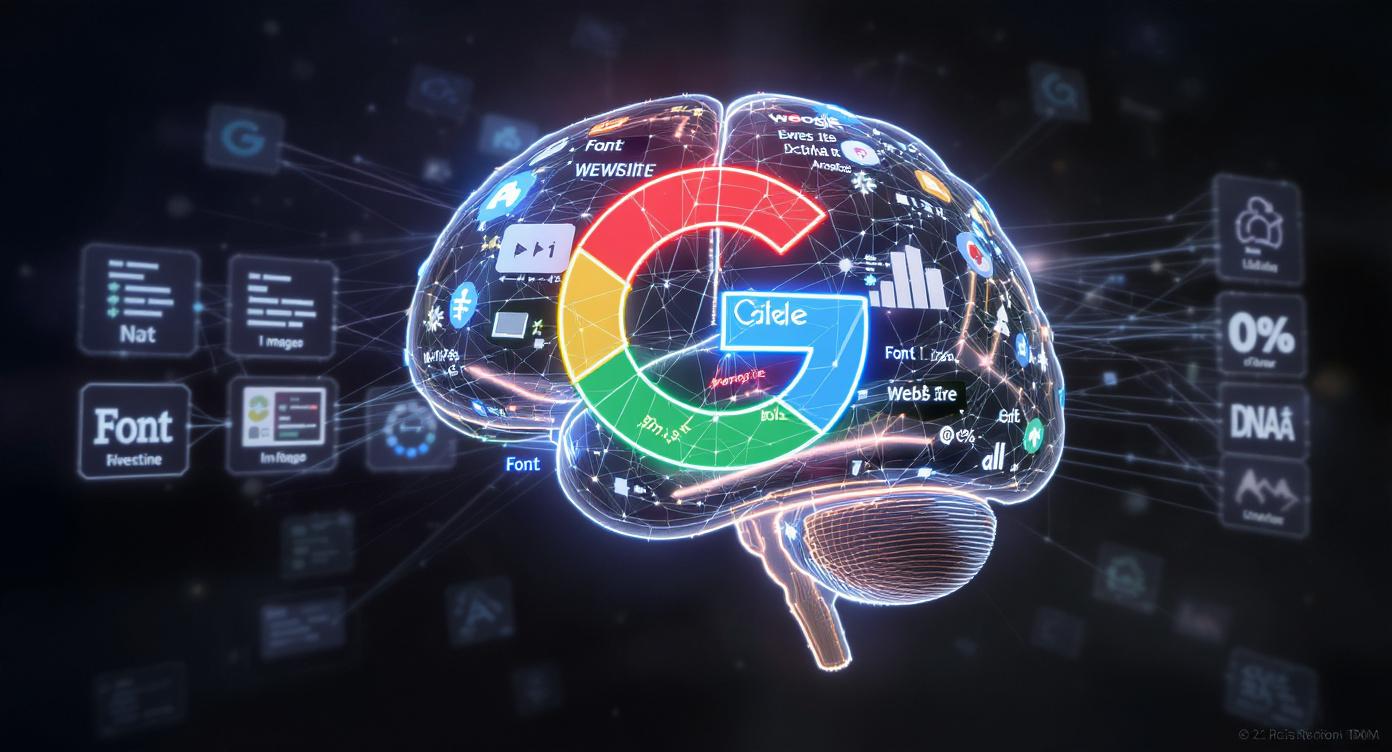
When a business enters its URL, Pomelli scans the site and builds what Google calls a “Business DNA” profile — a digital blueprint capturing tone, typography, color palette, image style, and linguistic patterns. This DNA forms the foundation for all generated materials.
Once established, Pomelli can instantly generate creative campaign ideas, visuals, and text content aligned with the brand’s personality.
Currently, Pomelli is available in public beta in the U.S., Canada, Australia, and New Zealand, operating in English only. As an experimental project under Google Labs, it’s part of a larger strategy to bring advanced AI tools to real-world business users — especially SMBs seeking practical, scalable automation.
4. How Pomelli Works — From Website to Campaigns in Minutes
Step 1: Build Your Brand DNA
The journey starts with your website. By analyzing its structure, visuals, and copy, Pomelli learns what makes your brand unique. It identifies signature colors, preferred fonts, and tone of voice, then constructs a digital fingerprint that serves as a creative compass for everything the AI generates.
This process allows Pomelli to understand context — distinguishing between a friendly local café and a luxury furniture brand — ensuring that its content suggestions match your identity rather than generic business themes.
Step 2: Generate Tailored Campaign Ideas
Once your brand DNA is complete, Pomelli acts like an AI strategist. It proposes campaign ideas suited to your business type, such as seasonal promotions, community engagement posts, or product launches.
Users can select from the suggested ideas or input their own prompts (for example, “promote our eco-friendly collection for Earth Day”). Pomelli then generates headlines, captions, and design directions that maintain brand alignment.
Step 3: Create and Edit Branded Assets
The final step is content creation. Pomelli generates ready-to-use assets, including:
- Social media visuals optimized for platforms like Instagram and Facebook.
- Display banners for websites or Google Ads.
- Short ad copy and taglines consistent with brand tone.
Each asset can be edited inside Pomelli’s built-in workspace. You can tweak colors, rewrite text, and fine-tune imagery before exporting the final files. This integrated editing system ensures a smooth workflow for non-designers and busy entrepreneurs.
5. Key Features and Benefits
Pomelli’s innovation lies in how it combines generative AI with brand intelligence. Here are its standout features and why they matter.
1. Automated Brand Intelligence
Instead of asking users to manually input branding details, Pomelli reverse-engineers a business’s identity from its website. This “brand DNA” is stored and referenced across all future content generations, ensuring that each campaign feels cohesive and authentic.
2. Instant Asset Generation
Traditional campaign production involves multiple steps — ideation, design, copywriting, approval — often taking days or weeks. Pomelli compresses that into minutes. With AI automation, SMBs can produce complete campaigns in the time it once took to brief a designer.
3. Consistent Tone and Aesthetics
Whether you’re a boutique fitness brand or a local bakery, consistency builds trust. Pomelli’s understanding of tone and design ensures that all content — from Instagram captions to Google Ads banners — speaks in the same brand voice.
4. Democratization of Marketing
Pomelli’s mission is simple: make professional-grade marketing tools available to everyone. By lowering barriers to entry, it enables startups, freelancers, and family-run shops to compete with larger brands on creative quality.
5. Integration-Ready Framework
While still in beta, Pomelli’s potential lies in integration. Future updates could connect it to Google Ads, Workspace, or YouTube Studio, allowing users to publish or manage campaigns directly from within Google’s ecosystem.

6. Why Pomelli Matters for Small Businesses
For small businesses, Pomelli could be a turning point. Traditionally, marketing automation catered to large corporations with complex data infrastructures. Pomelli flips that dynamic, putting enterprise-level AI in the hands of everyday entrepreneurs.
By removing the need for design or copywriting expertise, it frees SMB owners to focus on what they do best — building their business. In essence, Pomelli acts as a creative team in a single tool, offering fast turnaround, consistent visuals, and adaptive tone.
More importantly, it bridges the gap between DIY tools and professional agencies. Unlike template libraries, Pomelli’s AI doesn’t just design — it thinks in your brand language.
The broader implication is clear: AI-assisted marketing is no longer a luxury; it’s the new normal.
7. Limitations and Early-Stage Caveats
Like any early-stage technology, Pomelli isn’t flawless. Businesses adopting it should keep several caveats in mind.
- Beta Limitations: As a Google Labs experiment, Pomelli may still have restricted features and occasional inaccuracies in its understanding of brand tone or layout.
- Website-Dependent: The quality of results depends on the strength of your existing website. Brands without consistent color schemes or tone may see weaker outputs.
- Language and Region: Only English is supported at launch, limiting global adoption.
- Pricing Unknown: Google has yet to disclose final pricing or subscription models.
- Human Oversight Required: While Pomelli can handle 90% of creative tasks, reviewing the final assets for cultural accuracy, humor, or nuance remains essential.
- Overlap with Competitors: Tools like Canva or Adobe Express already dominate visual design; Pomelli must differentiate through brand intelligence and ecosystem integration.
Despite these limitations, early testers report promising results in generating polished, personalized campaigns within minutes.
8. Best Practices for Getting the Most Out of Pomelli
To maximize Pomelli’s potential, SMBs can follow a few practical guidelines:
-
Prepare Your Brand Foundation
Ensure your website reflects your brand identity — colors, logos, and tone. Pomelli’s learning accuracy improves with better source material. -
Clarify Your Brand Voice
Use consistent language across your website and social media. The clearer your voice, the better Pomelli can replicate it. -
Treat AI as a Collaborator
Think of Pomelli as a creative assistant, not a replacement. Human review ensures your campaigns stay authentic. -
Iterate and Experiment
Use Pomelli’s prompts to test multiple campaign directions before choosing your final assets. -
Integrate Strategically
Pair Pomelli’s visual output with Google Ads, Analytics, or Workspace to build a cohesive marketing ecosystem. -
Collect Feedback
Share early campaigns with your audience and measure engagement. Adjust tone or visuals based on real-world performance data.
These practices can transform Pomelli from an automation tool into a key driver of creative growth.
9. Competitive Landscape — Where Pomelli Stands
Pomelli enters an increasingly crowded market of AI design tools, yet its approach sets it apart.
- Canva Magic Studio offers template-based AI content creation but lacks deep brand understanding.
- Adobe Express AI provides professional design tools but caters more to creatives than small business owners.
- Microsoft Designer integrates with Office 365 but focuses primarily on document-based visuals.
Pomelli’s key differentiator is its Google DNA — the ability to read and interpret real websites using Google’s search-driven contextual intelligence. This allows it to generate content that doesn’t just look right but feels right for your audience.
With future integrations into Google Ads or Business Profiles, Pomelli could become the missing link between discovery, design, and deployment — something no standalone design app currently offers.
10. The Future of Pomelli and AI-Powered Marketing
Pomelli’s launch signals a shift in how marketing will evolve over the next decade. As AI models grow smarter, they’ll not only create but also understand brand context, audience behavior, and market trends in real time.
We can expect future iterations of Pomelli to include:
- Multilingual Support: Expanding accessibility to global audiences.
- AI Video and Motion Design: Turning static campaigns into animated reels or ads.
- Seamless Google Integration: Direct publishing from Pomelli to Google Ads, Workspace, or YouTube.
- Performance-Driven Insights: AI feedback loops that learn from campaign performance data.
From a broader perspective, this move reinforces Google’s strategy: shifting from being just a platform provider to a creative enabler. In the near future, a local coffee shop might use Pomelli to design holiday campaigns while a global startup employs it to launch multi-region brand pushes — all through one tool.
However, as automation expands, ethical and creative questions will arise. How much of a brand’s identity should be entrusted to AI? Where do human imagination and authenticity fit in? Google will need to strike a careful balance between empowerment and over-automation.
11. Conclusion — A Glimpse of Tomorrow’s Marketing
Pomelli represents more than a new Google product — it’s a signal of how the creative process itself is changing. By translating your brand’s essence into a digital DNA, it empowers small businesses to generate professional, consistent, and engaging content faster than ever before.
For entrepreneurs with limited time or budgets, Pomelli is like having a creative agency on demand — one that learns your voice, evolves with your brand, and works around the clock.
Still, the human touch remains irreplaceable. Great marketing will always need real emotion, empathy, and storytelling. Pomelli doesn’t eliminate that — it enhances it by taking care of the repetitive work, allowing creators to focus on vision and connection.
As AI tools continue to shape the future of branding, Pomelli by Google Labs stands out as a pioneering experiment — one that could redefine how creativity, technology, and business growth intertwine.
For SMBs, this is more than just another tool launch. It’s an invitation to step into the next generation of marketing — where AI understands your brand as well as you do.